
Cologne Myths vs Reality:
What Is Cologne Really Like?
Article • reading time: 5 min. | 28. September 2026, written by Gianna Barabasch
Myth #1: "City life in Cologne means no real community"
This is probably the myth we hear most from people who've never lived here: Cologne is a big city, so surely nobody really knows their neighbours, right?

Reality: Cologne is a city of Veedel (tight-knit neighbourhoods, each with its own identity, regulars' tables and traditions). Nowhere shows this better than the Körnerstraßenfest in Ehrenfeld, running every year since 1998. Residents of the Körnerstraße literally move their sofas and armchairs onto the street, grill with their neighbours, and turn the block into an open-air living room for a day. It's organised by the neighbourhood, for the neighbourhood, and it draws in Kölner from other Veedel and visitors from outside the city too, all mixing together over food, music and secondhand stalls. Many of the street's smallshops, cafés and bars even donate part of their earnings from the day to local support organisations, a small but telling sign of how connected this "anonymous" neighbourhood really is.
And Ehrenfeld isn't alone: the Mülheimer Nacht turns venues across Mülheim into concert and exhibition spaces for an evening, the Südstadtfest fills Bonner Straße with an entire neighbourhood's worth of music and local stalls, and even Cologne's flea markets like the ones at Ebertplatz and the Alte Feuerwache feel more like neighbourhood get-togethers than shopping trips.
This sense of togetherness isn't limited to individual Veedel, either. On Neumarkt, the city's largest square, the "100 Stühle" initiative puts out 100 red chairs every summer with one explicit goal: Fighting loneliness by turning a busy transit space into somewhere people actually sit down and talk to each other. And when Cologne does go big, it goes big together: Gamescom, held here every August, is the largest gaming event in the world, drawing well over 350,000 visitors, while Cologne Jazzweek turns more than 20 venues across the city into stages every September. Even the biggest events here are built around bringing people together in person, not around anonymity. Cologne is known throughout Germany for the warmth, openness and tolerance of its residents.
Myth #2: "Cologne Is just the Cologne Cathedral"
Ask someone who's never visited what Cologne is known for, and you'll probably hear one word: the Dom.

Reality:
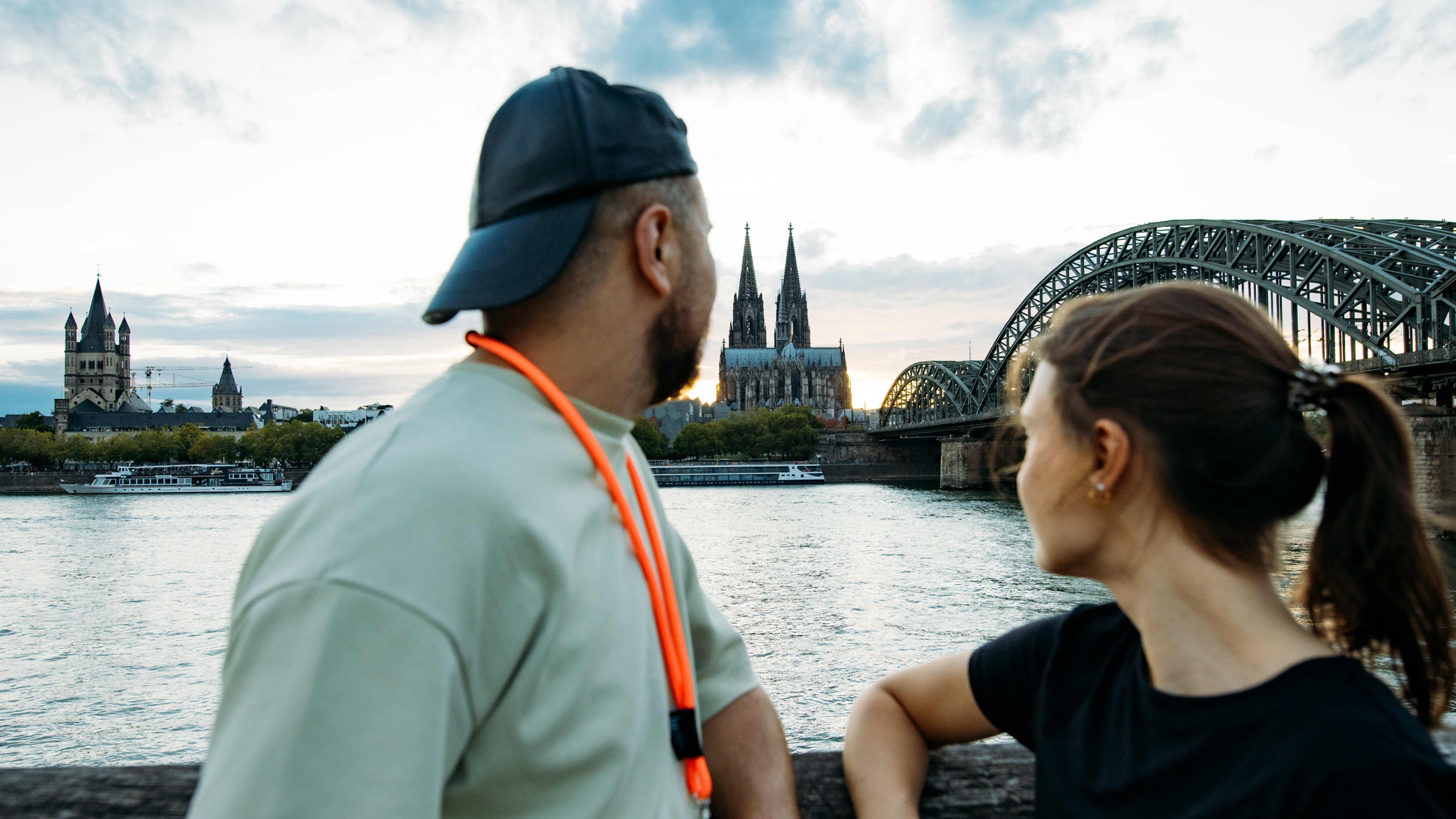
Cologne Cathedral and it's gothic architecture is stunning, but it's a fraction of what the city offers: this UNESCO World Heritage Site, declared in 1996, has spires visible across the entire city, and construction began in 1248, finished in 1880, and took over 600 years. At 144.5 meters, it is Germany's second tallest church and one of the most impressive gothic cathedrals. But Cologne has also more than 40 museums, from the world-class Museum Ludwig, the Roman Germanic Museum to quirky spots like the Chocolate Museum. Beyond that, each Veedel has its own personality: Ehrenfeld's creative, multicultural energy, the Belgian Quarter's boutiques and bars, the Südstadt's laid-back riverside charm.
And then there's football! 1. FC Köln isn't just a club, it's a citywide identity, with fans singing "Kölle" long before kickoff and the city turning into a sea of red and white on major sports events. There's also Cologne's beer cultural significance: Kölsch, a refreshing beer, is traditionally served in small 200 ml glasses called Stangen by a Köbes (the traditional waiter), who'll keep bringing you a fresh one until you put a coaster on top of your glass. A whole ritual built around one beer style you won't find anywhere else in Germany. In traditional breweries like Päffgen or Früh am Dom, the Köbes even plays a bit of a character: their gruff, no-nonsense banter ("herber Charme") is a bit of a performance, designed to tease guests rather than actually offend them. Half the fun is learning to banter right back. The Dom is a great first stop, not the whole story!
Myth #3: "Cologne vs Düsseldorf: Are they basically the same?"
To outsiders, two big cities on the Rhine, 40 minutes apart, can look interchangeable.

Reality: Ask anyone from either city and you'll get a very different answer: Cologne and Düsseldorf have one of Germany's most good-natured (and long-running) city rivalries. Kölsch beer vs. Altbier, completely different Karneval traditions, and a friendly rule that you never, ever order the other city's beer while you're there. It's a rivalry worn with pride on both sides.
Myth #4: "Cologne isn't really a student city in Germany"
Cologne doesn't always make the classic "best university towns in Germany" lists. Other german cities like Heidelberg, München, Tübingen or Freiburg tend to get that reputation instead.

Reality: The numbers tell a different story. Around 95,000 students are enrolled across Cologne's universities, making it one of the largest student cities in the country. The University of Cologne alone counts roughly 47,000 students with an international student body of around 12%. And with the first Cologne intake of international students arriving at IU International University of Applied Sciences in October 2026, that number is only going to grow!
Myth #5: "Cologne Is only exciting during carnival season"
Cologne Carnival gets all the international attention, so it's easy to assume the rest of the year is quiet in comparison.

Reality: Cologne's calendar is full of large street festivals, markets and events all year round. The Körnerstraßenfest is just one of many. From summer street festivals to Christmas markets in December, there's always a reason for neighbours to spill out onto the streets together. And here's a fun fact even some locals forget to mention: Cologne Carnival itself isn't just a February thing - the "fifth season" officially kicks off on 11.11. at 11:11am and runs all the way through to Ash Wednesday, with the big street parties concentrated in the final week before Lent. The festivities also include a triumvirate of fictional rulers. Around one million people celebrate on the Thursday before Ash Wednesday. The highlight is the Rose Monday Parade, with colorful floats. So really, Cologne is celebrating some version of Karneval for the better part of four months.
None of this means that every stereotype is entirely made up. But once you look past the postcard version, what you'll actually find is a intercultural city built out of dozens of small, distinct neighbourhoods, each with its own rhythm, regulars and reasons to feel like home. That's a very different picture from "big, anonymous city with a cathedral," and it's the one international students who study here end up recognising as the real Cologne!
Ready to become part of a Cologne Veedel yourself? Discover your study options at IU Cologne and find out why this city feels a lot smaller and friendlier than its size suggests.
Award-winning education at IU


